
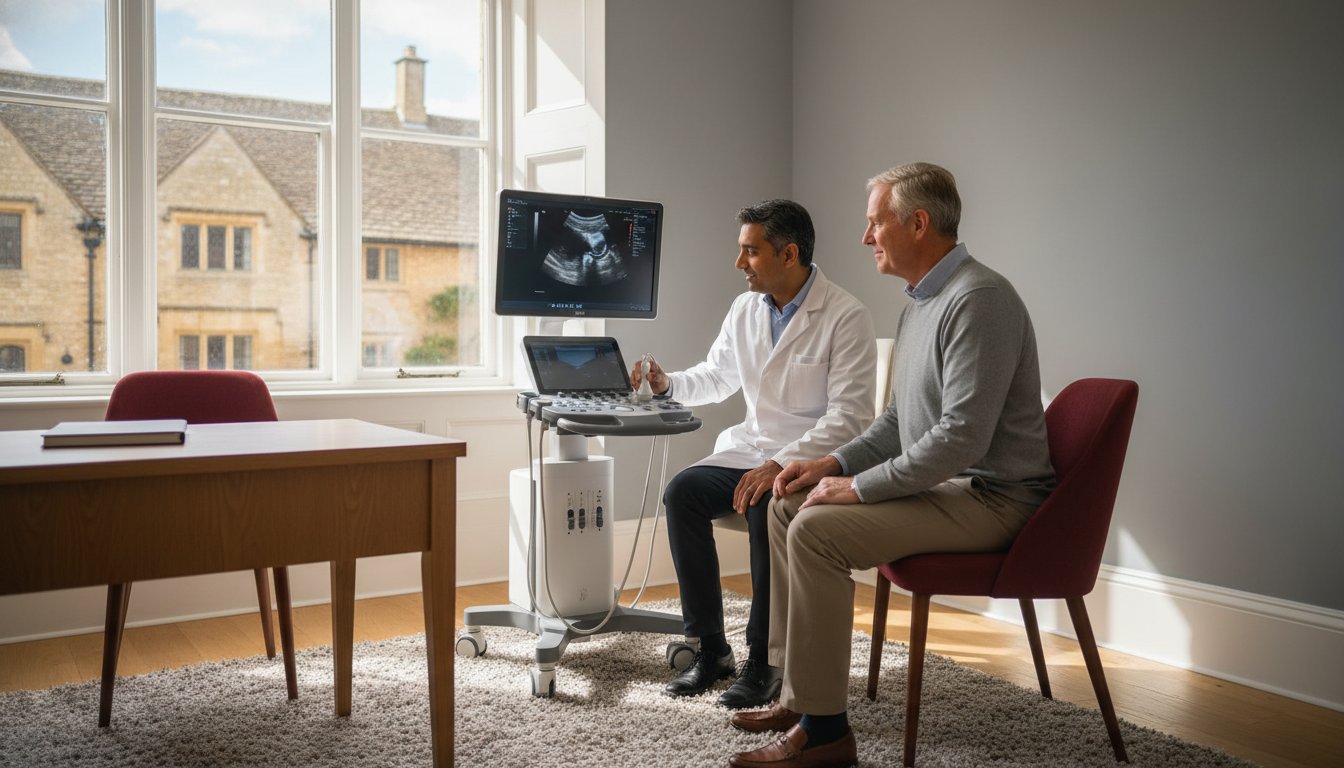
Did you know that as many as one in five knee injections performed without imaging fails to reach the intended joint space? You’re likely tired of persistent swelling and the frustration of missing a favourite round of golf or a simple walk in the park. It’s natural to feel anxious when stairs become a daily challenge and the conversation starts shifting toward the possibility of surgery. We understand that you’re looking for a reliable, professional way to regain your mobility and reduce inflammation without delay.
This guide demonstrates how a precision-guided steroid injection of knee provides a vital window of relief, allowing you to engage with the rehabilitation needed for long-term health. We’ll outline the clinical benefits of using ultrasound technology to ensure accuracy, manage your expectations for the procedure, and provide a clear recovery timeline. By the end of this article, you’ll have a logical path forward to move away from pain and back toward the activities that define your quality of life.
Key Takeaways
- Learn why ultrasound guidance is essential for ensuring your treatment reaches the exact source of inflammation, avoiding the inaccuracies of landmark-based injections.
- Understand how a steroid injection of knee works by targeting the synovium to rapidly reduce swelling and restore comfortable movement.
- Discover the typical timeline for pain relief, including the immediate effects of the local anaesthetic and the long-term benefits of the corticosteroid.
- Master your recovery with essential aftercare advice, including why a 48-hour rest period is crucial for maximising the longevity of your results.
- Explore how specialist care at a private pain clinic in Oxfordshire provides a streamlined path from expert diagnosis to active rehabilitation.
What is a Steroid Injection of the Knee?
A steroid injection of knee is a precise medical intervention designed to deliver potent anti-inflammatory medication directly to the site of discomfort. It’s vital to understand that these are corticosteroids, which are very different from the anabolic steroids used in performance enhancement. These medications mimic naturally occurring hormones to dampen the immune response and settle the local environment. By specifically targeting the synovium, or the joint lining, the injection helps to reduce the painful fluid build-up that often leaves your knee feeling tight, restricted, and warm to the touch. This targeted approach ensures the medication remains concentrated where it’s needed most, rather than circulating throughout the entire body.
Most procedures involve a combination of a fast-acting local anaesthetic and the steroid itself. You’ll often feel an initial “numbing” effect that provides immediate, temporary relief from the sharpest pains. The corticosteroid then begins its gradual onset over three to seven days, providing the sustained reduction in inflammation needed for active recovery. This treatment is particularly effective for managing several common musculoskeletal conditions:
- Osteoarthritis flares: When wear and tear leads to sudden, sharp increases in pain and swelling that limit your daily movement.
- Knee bursitis: Inflammation of the small, fluid-filled sacs that cushion the joint, often caused by repetitive pressure or injury.
- Rheumatoid arthritis: Managing localised joint swelling and heat as part of a broader autoimmune condition to prevent joint damage.
Who is a Good Candidate for this Treatment?
Determining your suitability involves identifying whether your pain is driven by “active” inflammation or mechanical wear. If you’re struggling with night pain or morning stiffness that takes over thirty minutes to clear, you’re likely experiencing an inflammatory flare. These symptoms usually respond exceptionally well to a steroid injection of knee. Safety remains our priority; you should avoid this treatment if you have an active infection, a high temperature, or known allergies to the medication.
Corticosteroids vs. Other Joint Injections
While we provide various options like Guided Hyaluronic Acid Injections, steroids are typically the first choice for managing acute, painful episodes. Hyaluronic acid acts as a lubricant, whereas steroids are designed to “switch off” the inflammatory fire. Because they work quickly to resolve swelling and heat, steroids are often the most effective way to create a window for physiotherapy to begin. Ultrasound-guided corticosteroid injections are the gold standard for achieving rapid, targeted relief from inflammatory knee pain.
The Clinical Precision of Ultrasound-Guided Knee Injections
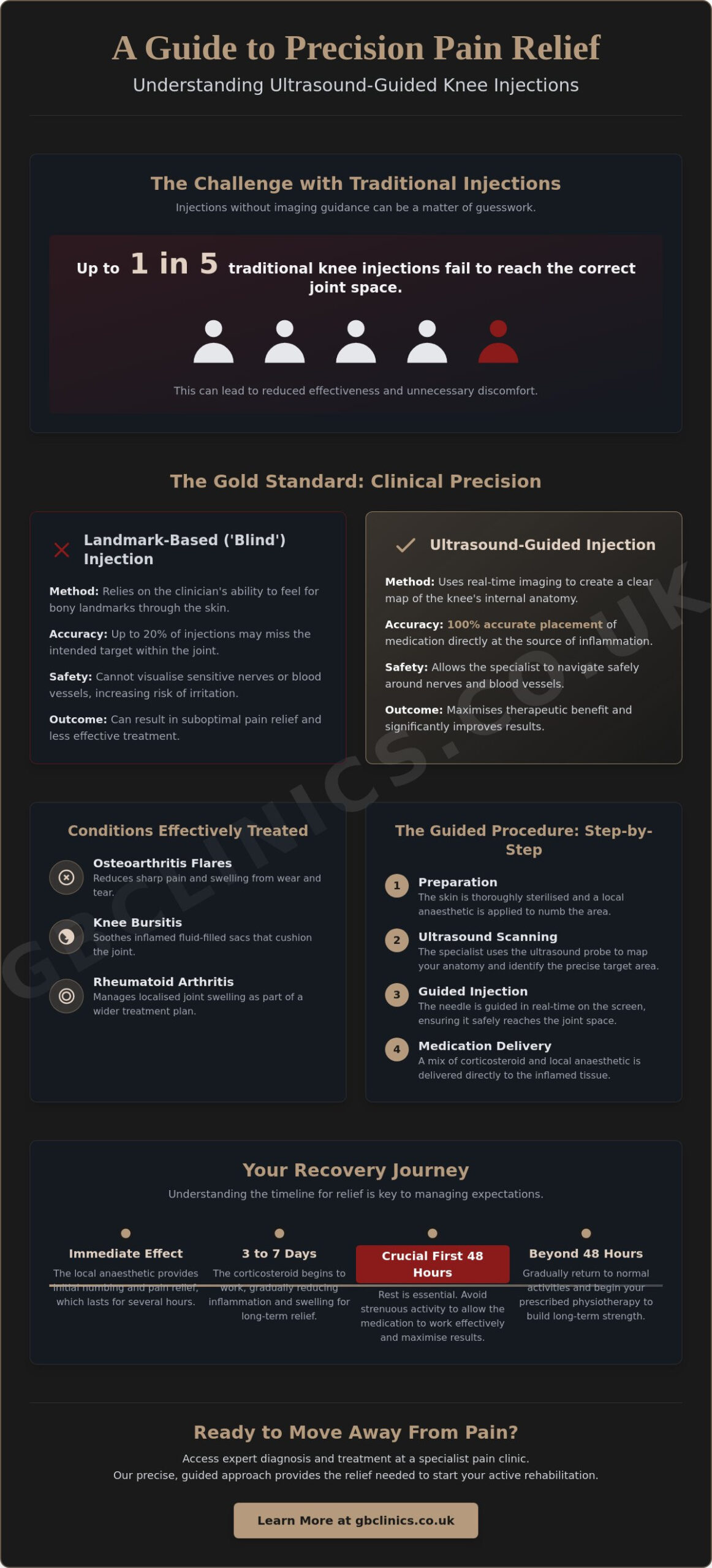
Traditional “blind” injections rely on a clinician’s ability to feel bony landmarks through the skin. While experienced practitioners can be successful, research suggests that up to 20% of these injections miss the intended joint space. This inaccuracy can lead to suboptimal results or unnecessary discomfort. By contrast, an ultrasound-guided steroid injection of knee allows for 100% accuracy. We use high-frequency sound waves to create a crystal-clear map of your internal anatomy, ensuring the medication is delivered precisely where inflammation is most active.
This clinical precision isn’t just about hitting the target; it’s about safety. Ultrasound allows your specialist to navigate around sensitive nerves and blood vessels that are invisible to the naked eye. This level of detail significantly reduces the risk of post-procedural pain and improves the overall therapeutic outcome. If you’re looking for this level of expertise, you might consider visiting a specialist pain clinic where diagnosis and treatment happen in a single, efficient appointment.
The Technology Behind the Treatment
The beauty of real-time imaging lies in its ability to show the needle’s path as it enters the joint capsule. We look specifically for an “effusion,” which is a pocket of inflammatory fluid that serves as a clear indicator of where the medication will be most effective. Seeing your own anatomy on the screen often provides immense peace of mind. It transforms a medical procedure into a collaborative process where you can understand exactly why you’ve been in pain. Many patients ask, How Long Does the Relief Last?; the answer often depends on the accuracy of this initial placement.
The Procedure Step-by-Step
The process begins with thorough skin preparation using a sterile solution. We apply a local anaesthetic to the skin and deeper tissues to ensure the procedure is as comfortable as possible. During the “guided” moment, you’ll see the needle tip on the monitor, ensuring it sits perfectly within the joint space before the corticosteroid is released. Once the injection is complete, we perform immediate mobility checks and apply a small dressing. This methodical approach ensures you leave the clinic feeling supported and informed about your next steps.
Managing Expectations: How Long Does the Relief Last?
Understanding the timeline of a steroid injection of knee is essential for planning your path back to activity. Most patients experience a distinct two-phase response. Initially, the local anaesthetic provides a significant reduction in pain within minutes of the procedure. This effect is temporary and typically wears off after 24 to 48 hours. You might notice a slight return of discomfort during this “gap” before the corticosteroid fully begins its work. The anti-inflammatory effect usually becomes noticeable between day three and day seven, gradually reaching its peak as the swelling subsides.
The longevity of this relief depends on several individual factors. In cases of mild to moderate inflammation, the benefits can last for several months, whilst more advanced conditions may require a more frequent review. We consider several variables when predicting your outcome:
- Severity of arthritis: Higher grades of joint wear may limit the duration of the anti-inflammatory effect.
- Activity levels: Returning to high-impact sports too quickly can place undue stress on the joint before it has fully settled.
- Body weight: Increased mechanical load on the knee joint can influence how quickly the medication is metabolised.
We view this treatment as a vital window of opportunity. The goal isn’t just to mask the pain; it’s to create a period of comfort where you can engage in active rehabilitation. By reducing the “noise” of inflammation, you can work on strengthening the muscles that support your knee. To protect the long-term health of your cartilage, we generally adhere to the “Rule of Three,” recommending no more than three injections into the same joint within a twelve-month period.
Why Do Some Injections Wear Off Sooner?
In advanced “bone-on-bone” osteoarthritis, the mechanical irritation is so constant that even a potent steroid may struggle to provide long-term relief. Your metabolic health also plays a role; conditions like diabetes can sometimes influence how your body responds to corticosteroids. If an injection wears off sooner than expected, it’s often a sign that we need to adjust your broader management plan or consider alternative therapies to support the joint structure.
Steroids vs. Hyaluronic Acid: Which is Better for You?
Steroids are the “firefighters” of joint care, designed to quickly douse the flames of acute inflammation. In contrast, a Guided Hyaluronic Acid Injection acts more like a lubricant, providing a “gel-like” cushion for chronic wear and tear. For some patients, we may recommend a combination approach, using a steroid to settle a flare-up before following up with hyaluronic acid to provide longer-term structural support and lubrication.
Your Recovery Journey: Aftercare and Maximising Results
The success of your steroid injection of knee depends heavily on the first few days following the procedure. Whilst the injection itself is a precision task, the way you manage your recovery determines how long that relief lasts. We advise a strict 48-hour rest period. This isn’t just about comfort; it’s a clinical necessity to prevent the “washout” effect, where the medication is absorbed too quickly into the bloodstream rather than staying within the joint capsule to treat the inflammation.
During this initial period, you might experience what is known as a “steroid flare.” This is a temporary increase in discomfort that occurs as the corticosteroid crystals settle within the joint. It doesn’t mean the treatment has failed. You can manage this effectively by applying an ice pack for 10 to 15 minutes every few hours. If the pain feels sharper than usual, simple over-the-counter analgesia can help bridge the gap until the anti-inflammatory effects take hold.
The First 48 Hours: A Patient Checklist
- Step 1: Keep the injection site dry and clean for at least 24 hours to minimise any risk of surface bacteria entering the puncture site.
- Step 2: Avoid strenuous exercise, heavy lifting, or prolonged standing. Your goal is to keep the joint as quiet as possible.
- Step 3: Monitor your pain levels. It’s normal for the knee to feel slightly “full” as the local anaesthetic wears off.
Safety remains our priority. Whilst complications are extremely rare, you must monitor the area for signs of infection. If you notice spreading redness, intense heat, or if you develop a fever or chills, contact your clinician immediately. These symptoms require prompt professional attention to ensure your recovery remains on track.
Integrating Physiotherapy for Long-Term Success
The real progress happens between the two and six-week mark. This is the “sweet spot” where inflammation is at its lowest, providing a unique window to strengthen the structures around the joint. Without this proactive step, the pain often returns once the medication wears off. Focus on low-impact exercises that build quadriceps and gluteal strength, as these muscles act as the natural shock absorbers for your knee. Our team provides Advanced Physiotherapy to help you transition from temporary pain relief to lasting mobility. To secure your recovery path, you can book a follow-up assessment with our specialist team today.
Accessing Specialist Knee Care at GB Clinics in Oxfordshire
Choosing where to receive a steroid injection of knee is a decision that directly impacts your recovery trajectory. Whilst primary care provides a vital foundation, a private pain clinic offers a level of specialised focus that’s difficult to replicate in a general setting. Our Oxfordshire centre is designed to bridge the gap between initial discomfort and active rehabilitation. We provide a streamlined environment where your concerns are heard and addressed with clinical precision, ensuring you don’t face the administrative delays or long waiting lists often found in broader healthcare systems.
The primary advantage of our approach is the presence of musculoskeletal (MSK) specialists who manage both the diagnostic and therapeutic phases of your care. Instead of being referred to different departments for scans and then again for treatment, you receive a comprehensive assessment in a single appointment. This efficiency ensures that your steroid injection of knee is administered with the full context of your diagnostic imaging. This leads to more accurate placement, reduced discomfort, and significantly better patient outcomes.
Our Integrated Approach to Joint Health
We believe that an injection is rarely the final step in your journey; it’s a catalyst for movement. By combining diagnostic ultrasound with immediate therapeutic action, we identify the exact source of your pain whilst you’re in the room. For complex cases that require more than anti-inflammatory medication, we offer a range of advanced options, including shockwave therapy and prolotherapy. These treatments work alongside our Advanced Physiotherapy services to ensure your recovery is supported by a personalised plan. We tailor every strategy to your specific mobility goals, whether that’s returning to the golf course or simply walking without hesitation.
Next Steps: Booking Your Assessment
Our clinic is conveniently located within Oxfordshire, offering easy access and a welcoming, professional atmosphere that avoids a cold, institutional feel. When you attend your first appointment, please bring any previous scan results and a current list of medications. This allows our team to build a complete picture of your health history and ensure the safest possible treatment path. Taking the first step toward a pain-free life is straightforward. We invite you to book your specialist knee assessment at GB Clinics today and experience the difference that expert-led, compassionate care can make to your mobility.
Taking the Next Step Toward Lasting Mobility
Persistent knee pain doesn’t have to define your daily life or limit your favourite activities. A precisely delivered steroid injection of knee serves as a powerful catalyst, settling acute inflammation and opening a vital window for active rehabilitation. By prioritising accuracy through ultrasound guidance, you ensure that your treatment is as effective and comfortable as possible. This precision-led approach is designed to help you reclaim your mobility and return to the movements that matter most. Beyond musculoskeletal care, addressing all facets of well-being is crucial for long-term health, and for those seeking expert advice on men’s wellness, Dr. Sankeerth Reddy’s Clinic offers valuable resources.
Our Oxfordshire clinic is dedicated to providing this high-level expertise in a supportive, professional environment. With our specialist MSK clinicians and integrated physiotherapy pathways, we focus on your long-term health rather than just short-term fixes. Every assessment includes expert-led diagnostic ultrasound to ensure we understand the unique needs of your joint. You deserve a clear, professional path toward recovery that prioritises your individual goals.
Schedule Your Ultrasound-Guided Injection in Oxford today to begin your journey back to an active lifestyle. We look forward to helping you move with confidence once again.
Frequently Asked Questions
How long does a steroid injection in the knee last?
Relief from a steroid injection of knee typically lasts between two and twelve weeks, depending on the severity of the underlying condition. Whilst some patients experience several months of comfort, others with advanced wear may find the effects shorter. This period of reduced pain is designed to facilitate active rehabilitation, helping you build the strength needed to manage your symptoms long after the medication has been metabolised by the body.
Is a steroid injection for the knee painful?
Most patients find the procedure involves only minimal discomfort, often described as a sharp pinch or a pressure sensation. We use a local anaesthetic to numb the skin and deeper tissues before the corticosteroid is administered. Using ultrasound guidance ensures the needle follows the most efficient path, avoiding sensitive structures like nerves. This precision significantly reduces the likelihood of post-procedural soreness compared to traditional landmark-based methods.
Can I drive home after a knee steroid injection?
You can typically drive home after the procedure, provided you feel comfortable and the local anaesthetic hasn’t caused any temporary weakness or numbness in the leg. We recommend waiting in the clinic for 15 to 20 minutes to ensure you’re fit to operate a vehicle. However, it’s often sensible to arrange a lift if you’re feeling particularly anxious or if your knee was highly symptomatic before the appointment.
What are the side effects of a steroid injection in the knee?
The most common side effect is a “steroid flare,” which causes temporary increased pain for 24 to 48 hours after the injection. Other potential effects include thinning of the skin or fat at the injection site and a temporary rise in blood sugar levels. Rare but serious risks include joint infection, which occurs in approximately one in 10,000 cases. We provide detailed aftercare instructions to help you monitor and manage these possibilities safely.
How many steroid injections can I have in my knee per year?
Clinical guidelines generally recommend a maximum of three steroid injections into the same joint within a twelve-month period. Repeatedly injecting corticosteroids too frequently can potentially weaken the tendons and cartilage over time. If you find that the relief is becoming shorter with each treatment, our specialists will discuss alternative options, such as Guided Hyaluronic Acid Injections or advanced physiotherapy, to provide more sustainable long-term support.
Will a steroid injection cure my knee osteoarthritis?
A steroid injection of knee is not a cure for osteoarthritis, but it’s an exceptionally effective tool for managing inflammatory symptoms. Osteoarthritis is a degenerative condition, meaning the structural changes to the cartilage remain. The injection works by reducing the swelling and pain that prevent you from exercising. By using this window of relief to strengthen the surrounding muscles, you can slow the progression of the disease and improve your daily function.
Can I have a steroid injection if I have diabetes?
You can have a steroid injection if you have diabetes, though it’s important to monitor your blood glucose levels closely for several days afterwards. Corticosteroids can cause a temporary spike in blood sugar, which typically settles within a week. We advise you to discuss the procedure with your GP or diabetic nurse beforehand. This ensures your medication and monitoring routine are adjusted if necessary to maintain stable control during your recovery.
What is the difference between a steroid injection and a gel injection?
The primary difference lies in how they interact with the joint environment. Steroids act as powerful anti-inflammatory agents to quickly reduce heat and swelling. Gel injections, or Hyaluronic Acid, serve as a mechanical lubricant and shock absorber for the joint. Whilst steroids are often preferred for acute, painful flares, gel injections are frequently used for the long-term management of chronic wear and tear in patients looking to delay surgical intervention.





One Response