What if the answer to a joint that constantly feels like it might give way isn’t a more restrictive brace or invasive surgery, but a treatment that encourages your body to rebuild its own strength? If you’ve spent months managing persistent instability or found that traditional steroid injections only offer a temporary reprieve, the frustration is understandable. Many patients seeking prolotherapy Oxford have experienced this same cycle of uncertainty and are looking for a more permanent solution to their musculoskeletal discomfort.
We understand that chronic pain affects more than just your movement; it impacts your confidence and your daily quality of life. This article explains how specialist regenerative care strengthens ligaments at the source to provide a structured, non-surgical path toward lasting recovery. You’ll learn about the clinical process and what to expect from an expert-led plan designed to return you to the sports and activities you love with renewed stability and peace of mind.
Key Takeaways
- Understand how hypertonic dextrose solutions trigger your body’s natural inflammatory response to repair weakened ligaments and tendons.
- Discover why ultrasound-guided prolotherapy Oxford provides superior accuracy compared to traditional methods by targeting the exact site of tissue laxity.
- Learn about the three-stage regenerative process that transforms temporary inflammation into long-term structural stability through collagen remodelling.
- Identify how this non-surgical approach effectively manages chronic conditions like sacroiliac dysfunction and persistent elbow injuries.
- Explore the structured patient journey at our clinic, from the initial specialist diagnostic assessment to a personalised recovery plan.
Prolotherapy in Oxford: A Regenerative Solution for Joint Instability
For many individuals living with chronic joint pain in Oxfordshire, the standard cycle of rest and anti-inflammatory medication often fails to provide a lasting resolution. This is because these traditional approaches typically address the symptoms of pain rather than the underlying cause of joint dysfunction. At GB Clinics, we offer a different path through prolotherapy Oxford, a specialised regenerative treatment designed to rebuild the structural integrity of your joints without the need for invasive surgery.
The core philosophy of this treatment is simple: a stable joint is a pain-free joint. Whilst many patients have previously relied on steroid injections, there’s a growing awareness that these can sometimes lead to tissue weakening over time. In contrast, Prolotherapy uses a hypertonic dextrose solution to stimulate the body’s natural repair mechanisms. This approach has established our Oxford clinic as a centre of excellence for musculoskeletal health, providing a sophisticated alternative for those who haven’t found relief through conventional means.
The Science of Tissue Proliferation
The term “prolo” is derived from the word proliferation, which refers to the rapid production of new cells. When we inject the proliferant solution, it acts as a biological signal rather than a simple lubricant. It creates a localised, controlled inflammatory response that alerts the immune system to an area that has failed to heal properly. This shift from a state of chronic, stagnant pain to active tissue repair is what allows the body to finally resolve long-standing injuries to ligaments and tendons.
Why Stability Matters More Than Temporary Pain Relief
Treating pain alone is often like silencing a fire alarm without putting out the flames. When ligaments are stretched or weakened, a condition known as laxity, the joint becomes unstable, leading to abnormal wear and eventual degeneration. Prolotherapy targets this laxity directly, encouraging the growth of new, stronger connective tissue. Joint stability is the primary goal of this regenerative therapy, ensuring your body is structurally sound enough to support your daily activities and athletic pursuits.
How Prolo-Injection Therapy Stimulates Natural Repair
Understanding the biological mechanism behind prolotherapy Oxford helps patients manage their expectations and appreciate the value of a structured treatment programme. Unlike a simple pain-masking injection, prolotherapy acts as a biological catalyst. It restarts a healing process that may have stalled due to poor blood supply or the chronic nature of the injury. This treatment doesn’t provide an instantaneous “fix”; instead, it facilitates a sophisticated, multi-stage recovery that mirrors the body’s natural response to acute trauma.
The primary objective is the production of Collagen Type 1. This specific protein is the building block of healthy, resilient ligaments and tendons. Research published in Prolotherapy in Primary Care Practice highlights how this approach provides a viable pathway for tissue strengthening in cases where standard conservative care has reached a plateau. By triggering a controlled inflammatory response, we encourage the body to lay down these new fibres, which eventually contract and tighten the joint structure.
The Three Stages of Ligament Recovery
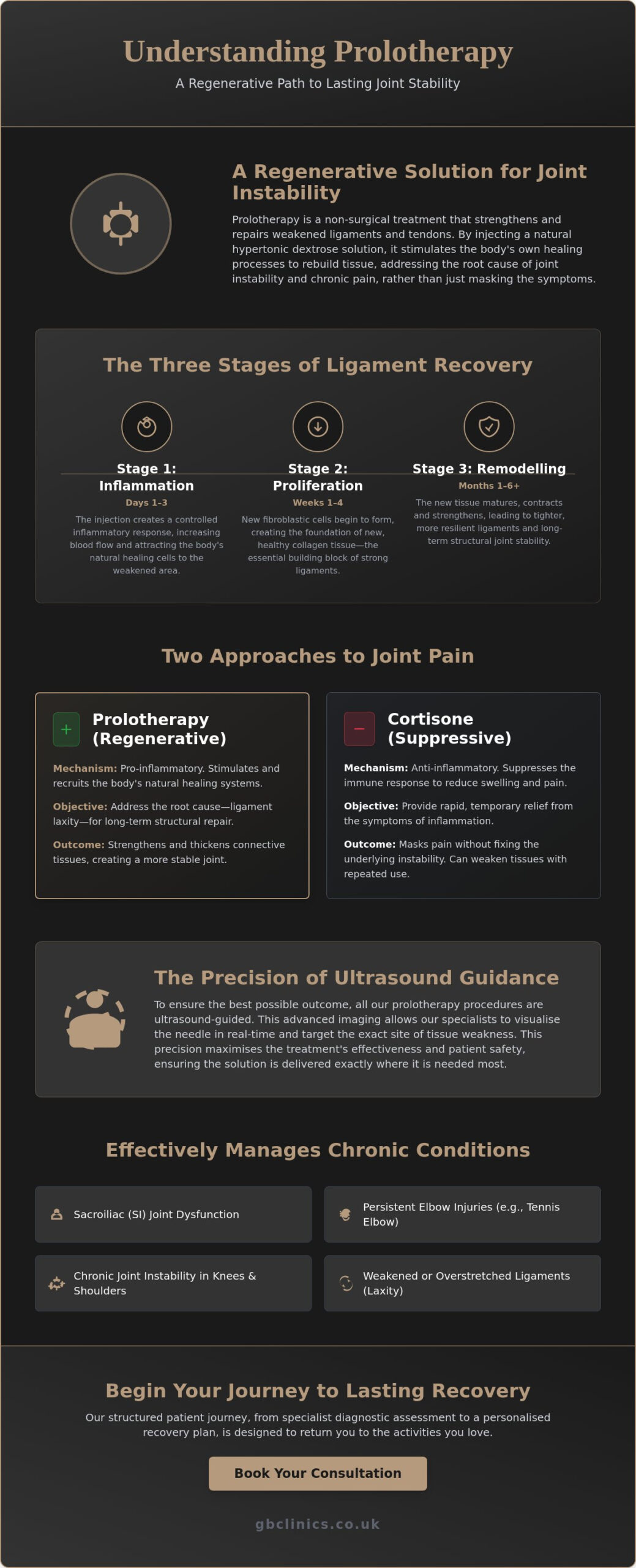
The regenerative journey follows a specific timeline. During Stage 1, the initial inflammatory trigger (days 1-3), the injection creates a temporary increase in blood flow and attracts healing cells to the site. In Stage 2, the proliferation phase (weeks 1-4), new fibroblastic cells begin to form the foundation of new tissue. Finally, Stage 3 involves maturation and remodelling (months 1-6). This is where the new tissue gains its permanent strength and elasticity, resulting in the long-term joint stability patients desire.
Prolotherapy vs. Cortisones
It is helpful to distinguish this approach from a traditional ultrasound guided steroid injection Oxford. Whilst steroids are highly effective at “cooling down” an acutely inflamed joint by suppressing the immune response, prolotherapy does the opposite. It is “pro-inflammatory” by design, using the immune system to rebuild rather than quieten it. If your goal is to address the underlying cause of instability rather than just suppressing a flare-up, regeneration is often the more appropriate choice.
Because the structural benefits are cumulative, most patients require a series of sessions to achieve optimal results. Each treatment builds upon the last, progressively thickening the connective tissues and reducing the sensation of the joint “giving way”. If you’re unsure which pathway is right for your specific injury, you can explore our range of specialist MSK services to see how we tailor recovery plans to individual needs.
The Importance of Ultrasound-Guided Prolotherapy
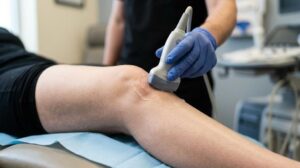
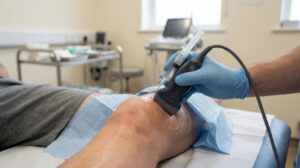
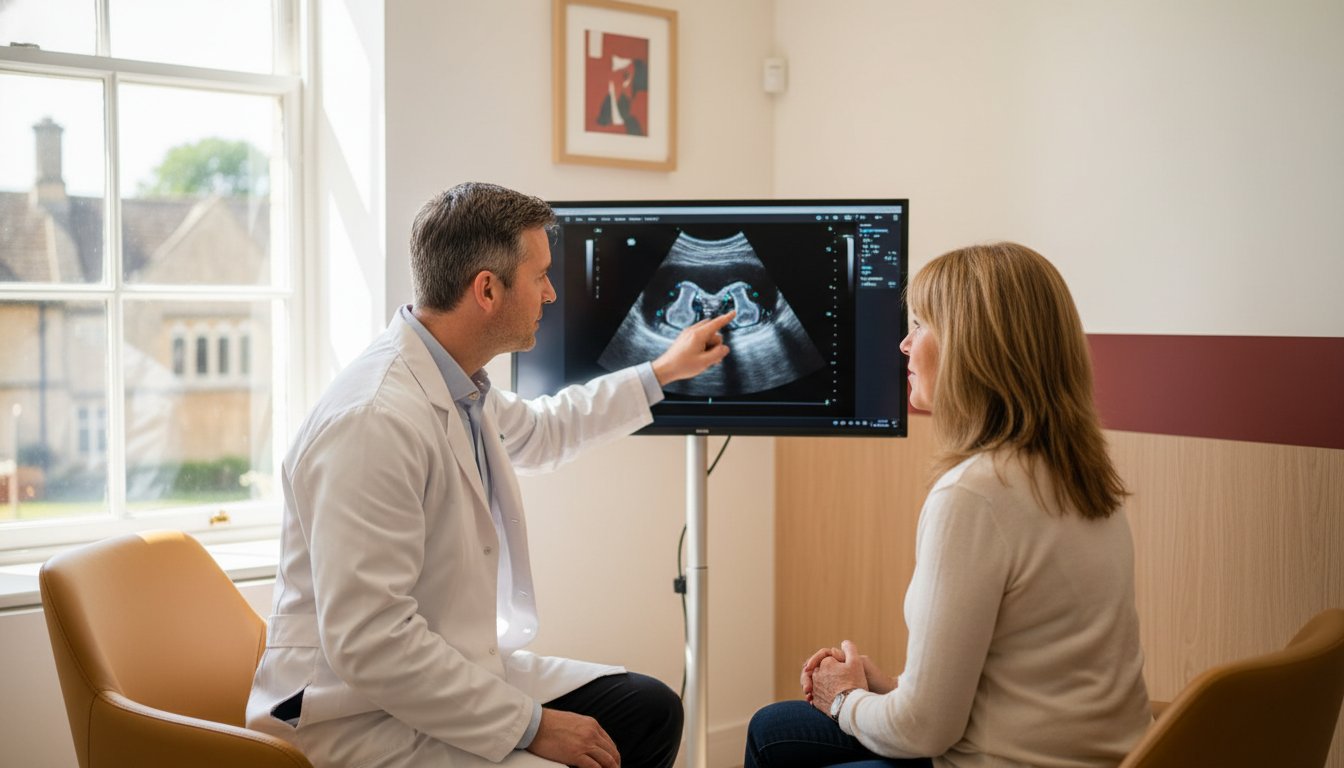
The success of regenerative medicine is inextricably linked to the accuracy of the delivery. Whilst some practitioners may still rely on “blind” or landmark-based injections, these traditional methods often fall short when dealing with complex joint structures. We believe that prolotherapy Oxford should always be performed under direct, real-time visualisation. By utilising ultrasound guidance, our specialists ensure the proliferant solution is delivered exactly where it’s needed, specifically at the fibro-osseous junction. This is the critical point where the ligament attaches to the bone and where healing most frequently stalls.
This level of precision is about more than just clinical efficacy; it’s about your physical experience. When we can see the needle’s path on a screen, we can navigate around sensitive structures like nerves and blood vessels with confidence. This approach significantly reduces the risk of post-procedural discomfort and enhances the safety profile of the entire treatment. For those who have previously experienced inconsistent results with other injections, this guided approach is often the deciding factor in achieving a successful outcome.
Visualising the Source of Pain
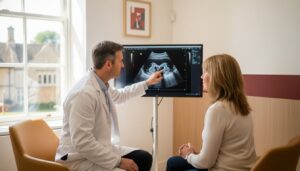
Diagnostic ultrasound provides a window into the joint that a standard physical exam simply cannot match. It allows our specialists to identify subtle micro-tears and areas of tissue thickening that might otherwise go unnoticed. Because we can see the tissue’s response to movement during the scan, we can pinpoint the exact site of ligament laxity. This dynamic assessment ensures that the treatment is directed at the actual source of instability, rather than a general area of discomfort.
GB Clinics Precision Standards
Our facility is dedicated to maintaining the highest standards of prolotherapy Oxford through the use of state-of-the-art diagnostic equipment. Every clinician on our team prioritises guided techniques because the data consistently shows superior patient outcomes and more reliable recovery timelines. We don’t believe in leaving your health to chance or tactile guesswork. Precision is the hallmark of private care at GB Clinics, and it’s the foundation upon which we build your personalised recovery plan.
Conditions Treated: From Tennis Elbow to Sacroiliac Pain
The versatility of prolotherapy Oxford makes it a powerful option for a wide range of musculoskeletal issues, particularly those that haven’t resolved through rest or standard exercise alone. It isn’t just for elite athletes. Most of our cases involve everyday injuries that have become chronic, leading to a frustrating cycle of pain and restricted movement. Whether you’re struggling with a recurring ankle sprain or a persistent ache in your lower back, the goal remains the same: to restore the structural “snugness” of the joint by addressing ligamentous laxity.
Clinical research supports the efficacy of this approach across various body regions. For instance, data from established UK clinics indicates that 80% of patients receiving prolotherapy for chronic low back pain report significant improvement. Similarly, a study on rotator cuff lesions found that 52.5% of patients treated with prolotherapy reported excellent outcomes and significant improvements in shoulder motion within just three weeks of treatment. These figures highlight the potential for regenerative care to succeed where other treatments have plateaued.
Spinal and Pelvic Stability
Chronic low back pain is frequently linked to an “unstable” spine, where the lumbar ligaments no longer provide adequate tension. This often leads to compensatory muscle guarding and secondary stiffness. Prolotherapy is especially effective for sacroiliac (SI) joint dysfunction, which is a common source of referred pain in the hips and legs. By strengthening the pelvic girdle and lumbar supports, we can often resolve long-standing mobility issues and help patients regain their confidence in daily activities.
Sports Injuries and Tendon Health
Overuse injuries such as tennis elbow (lateral epicondylitis) and golfers elbow respond well to regenerative injections because they target the specific fibro-osseous junction where the tendon has failed to heal. We also frequently manage chronic Achilles tendinopathy and meniscus-related knee pain. In cases of mild osteoarthritis, strengthening the surrounding ligaments can significantly reduce the mechanical stress on the joint surface.
At GB Clinics, we don’t view the injection as a standalone cure. For a complete recovery, we integrate our injection therapy with Advanced Physiotherapy and massage therapy to ensure your movement patterns support your newly strengthened tissues. This holistic approach is essential for achieving long-term joint health and preventing future reinjury. If you’re tired of managing symptoms and want to address the root cause of your instability, a personalised recovery plan is the next logical step.
Choosing GB Clinics for Your Prolotherapy in Oxfordshire
Selecting the right clinical environment is as significant as the treatment itself when it comes to regenerative medicine. At GB Clinics, we provide a sophisticated setting where high-level clinical authority meets a supportive, welcoming atmosphere. For patients seeking prolotherapy Oxford, our approach is built on a foundation of precision and transparency. We ensure every individual understands their biological path to recovery before the first injection occurs, making the transition from chronic pain to active repair as seamless as possible.
A personalised, expert-led approach is vital because no two injuries are identical. The way a runner’s ankle responds to treatment differs from how a sedentary office worker’s sacroiliac joint might heal. By tailoring the concentration of the proliferant solution and the frequency of sessions to your specific tissue quality, we maximise the potential for long-term structural success. This dedicated focus on individual needs is why Oxfordshire residents trust us to manage their most persistent musculoskeletal challenges.
Your Consultation and Assessment
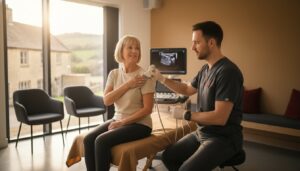
The journey begins with a comprehensive specialist consultation. During this initial meeting, we conduct a detailed physical examination and a thorough review of your medical history. We don’t just look at the site of the pain; we assess your overall biomechanics to understand why the injury became chronic. This is also the time when we discuss all non-surgical options. Whether it involves prolotherapy Oxford, advanced physiotherapy, or shockwave therapy, we ensure the chosen path is the most effective fit for your lifestyle and goals. You’ll receive a clear, honest projection of the expected number of treatments, typically a course of three sessions, to ensure your expectations are managed from the outset.
Booking Your Appointment in Oxford
Accessing specialist care at our Oxfordshire facility is straightforward. We welcome self-paying patients and can provide the necessary documentation for those with private health insurance, though it’s important to check your specific policy coverage for regenerative treatments. After your procedure, we provide detailed guidance on activity levels. Whilst you’ll need to avoid strenuous exercise for a short period to allow the initial inflammatory phase to work, we’ll quickly move you into a structured recovery plan.
Regaining confidence in your joints starts with a single, expert-led assessment. Our team is ready to guide you through the complexities of tissue repair with the clinical precision you expect from a leading private clinic. If you’re ready to move beyond temporary relief and invest in the long-term stability of your body, contact us today to schedule your diagnostic appointment.
Reclaim Your Joint Stability with Specialist Care
Choosing a path toward regenerative recovery means moving beyond the cycle of temporary pain relief. We’ve explored how prolotherapy Oxford provides a structured, non-surgical alternative for those struggling with persistent joint instability or chronic tendon issues. By harnessing the body’s natural healing response through precisely targeted injections, you can rebuild the structural integrity of your ligaments and return to the activities you love with renewed confidence.
Our specialist clinic is dedicated to expert-led MSK consultations and state-of-the-art ultrasound-guided procedures, ensuring your recovery plan is as accurate as it is effective. We focus entirely on non-surgical solutions that prioritise your long-term mobility and physical well-being. You don’t have to accept chronic pain or joint “giving way” as a permanent part of your life. Take the first step toward a more stable, active future by speaking with our team today.
Book Your Specialist Prolotherapy Consultation in Oxford
We look forward to helping you restore your strength and helping you get back to your best through personalised, expert care.
Frequently Asked Questions
Is prolotherapy painful during or after the injection?
You may feel a brief stinging sensation during the procedure, followed by a temporary ache. We often mix the proliferant solution with a local anaesthetic to minimise discomfort whilst the needle is in place. It’s normal to experience a dull soreness for 48 to 72 hours afterwards, as this signifies the start of the beneficial inflammatory response required for tissue repair.
How many sessions of prolotherapy will I need for my joint?
Most patients require a course of three sessions to achieve significant structural improvement. These appointments are typically spaced four to six weeks apart to allow the new collagen fibres to mature between treatments. Whilst some individuals notice a difference after their first visit, the cumulative effect of a full course is usually necessary for lasting joint stability.
Can I drive home after receiving a prolotherapy injection in Oxford?
We generally advise that you arrange for a friend or relative to drive you home after your prolotherapy Oxford appointment. Whilst the procedure is non-surgical, the local anaesthetic or post-injection soreness can occasionally make operating a vehicle uncomfortable or less safe. It’s best to rest the treated area for the remainder of the day to ensure the solution settles correctly.
What is the difference between prolotherapy and PRP therapy?
Prolotherapy uses a hypertonic dextrose solution to trigger healing, whereas Platelet-Rich Plasma (PRP) therapy uses a concentrated sample of your own blood platelets. Both are regenerative treatments, but they utilise different biological triggers. Prolotherapy is often a preferred first-line option for strengthening loose ligaments, whilst PRP might be selected for more complex tendon tears or specific joint surface issues.
How soon can I return to exercise after the treatment?
You should avoid strenuous exercise or high-impact activities for at least 48 to 72 hours following the injection. This initial rest period allows the inflammatory phase to begin without interruption. We usually recommend a gradual return to activity, starting with gentle range-of-motion movements before progressing to more intense training as directed by your specialist or our advanced physiotherapy team.
Is prolotherapy covered by private health insurance in the UK?
Prolotherapy is currently not covered by most major private health insurance providers in the UK. Patients usually choose to self-pay for the treatment as part of a private recovery plan. We recommend contacting your insurer directly to confirm their specific policy on regenerative musculoskeletal procedures, as coverage levels can vary significantly between individual plans and providers.
What are the potential side effects of prolo-injection therapy?
The most common side effects include temporary swelling, localised bruising, and a short-term increase in stiffness at the injection site. These are expected signs that the body’s repair mechanism has been successfully activated. Rare risks include infection or minor nerve irritation, which is why we use high-precision guided techniques to maintain the highest safety standards during every procedure.
Why is ultrasound guidance necessary for these injections?
Ultrasound guidance ensures the needle reaches the exact fibro-osseous junction where the ligament attaches to the bone. Without real-time visualisation, there’s a higher risk of missing the target or affecting surrounding structures like nerves and blood vessels. Using this technology during your prolotherapy Oxford treatment provides the precision required for optimal tissue regeneration and superior patient safety.